Written by Dr Julian De Silva
Dr De Silva offers the latest laser technology for rejuvenation of your skin in combination with regenerative medicine (Growth factor technology). This enables a higher level of laser to be used at the same time, reducing the recovery time.
Traditionally, advanced laser treatments resulted in almost 6 months of recovery, but using our latest technology this can be reduced to 2 weeks.
Laser treatment improves:
Fractionated CO2 technology differs from the previous technology as it is a single treatment that delivers more dramatic results than older, non-ablative lasers. The technology offers a significant improvement over traditional carbon dioxide (CO2) lasers because there is no prolonged recovery or redness.
The laser treatment must be tailored to the individual, depending on their skin types and the degree of facial ageing. The laser improves the appearance of the skin by reducing lines, wrinkles, sun damage, brown spots, acne scars and improved tone, texture and skin tightening.
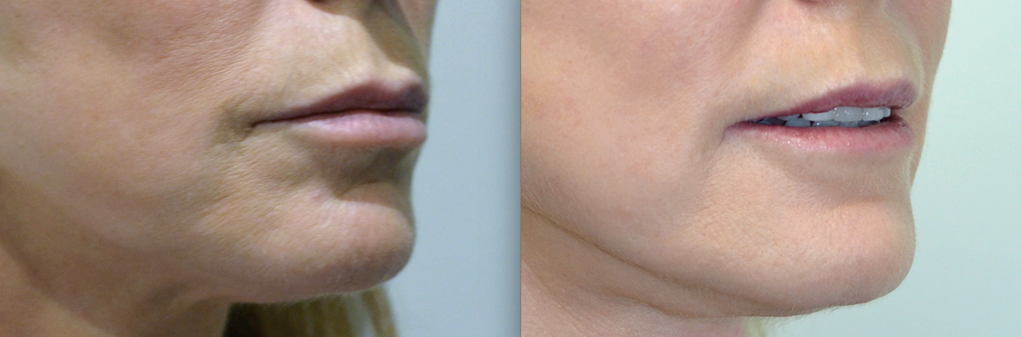
Combined CO2 & Erbium Laser Skin Resurfacing.
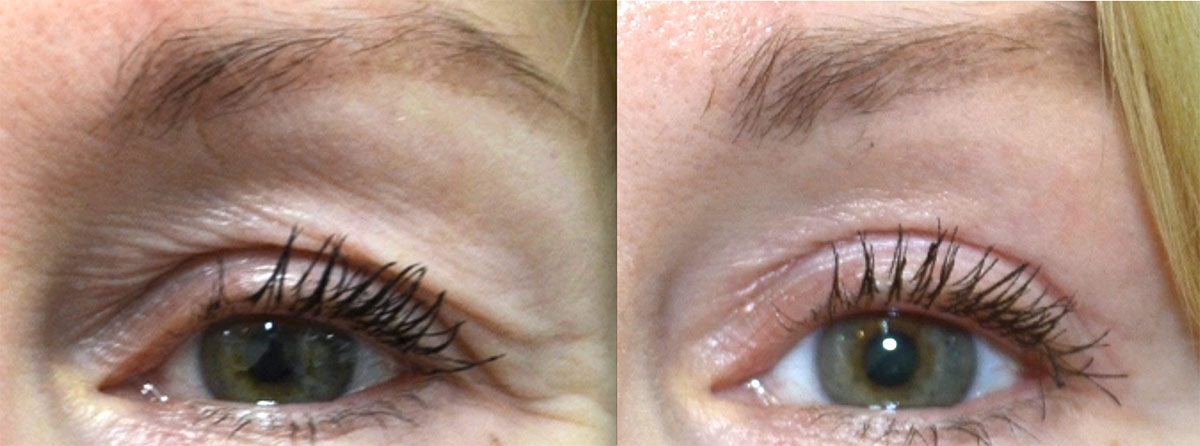
Combined CO2 & Erbium Laser Skin Resurfacing with Upper Blepharoplasty.
*Results may vary
Dr De Silva invested in the latest technology to offer his patients the most effective treatments and fastest possible recovery. He has imported the latest state-of-the-art CO2 Fractional Laser from the USA.
The fractional CO2 laser penetrates deep into your skin and provides heat to stimulate collagen production. The superficial component of the laser is effective for more superficial rejuvenation, softening fine lines and removing pigmentation from the top layers of skin.
The Cortex laser’s unique design treats the skin with precise control, and can be tailored to a specific problem and allotted downtime. For fine lines and superficial sun damage, a single procedure can produce significant results with a faster recovery.
Dr De Silva often uses fractionated CO2 laser resurfacing in conjunction with other facial cosmetic surgery to improve the results.
Click here to view more before and after photos.
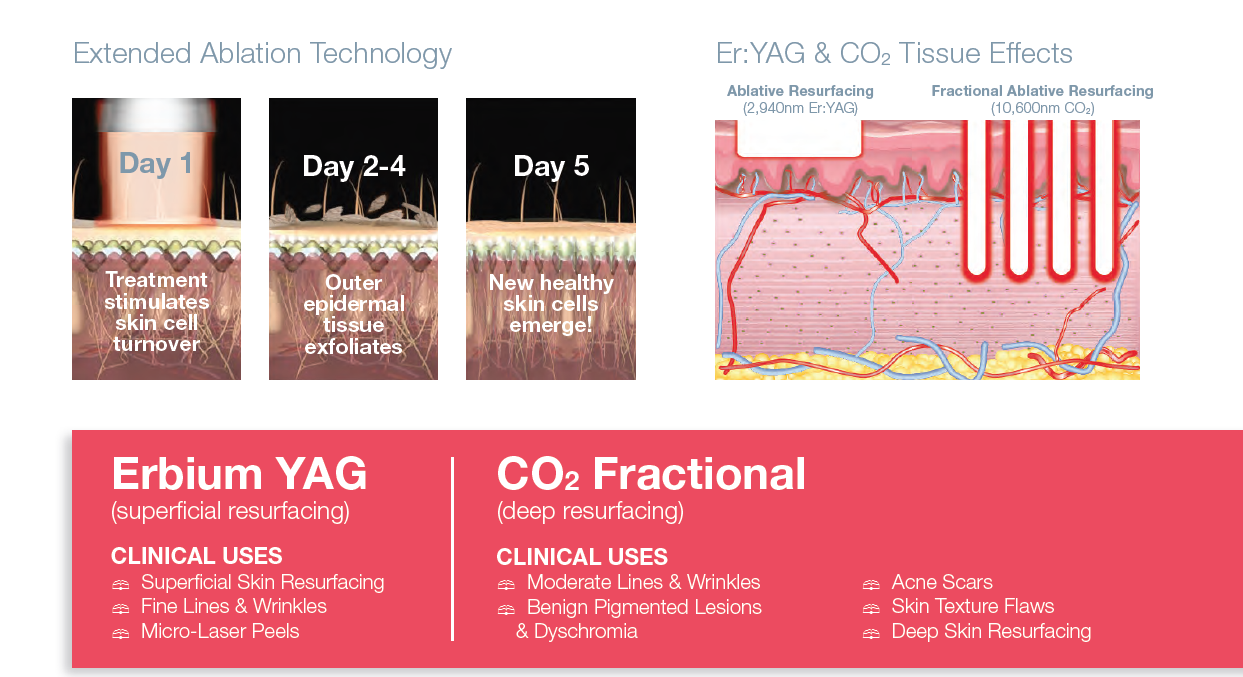
Dr De Silva uses a combination of state-of-the-art technology and techniques to enhance skin tightening and reduce recovery time.
Dr De Silva imported a state-of-the-art Combined CO2 and Erbium laser from the USA, which works to tighten skin on two separate levels.
The CO2 laser targets tightening the deep layers of the skin and the erbium laser targets tightening the superficial layers. Depending on your ethnicity and degree of skin quality, the settings are adjusted to ensure maximal tightening with reduced recovery time.
Laser resurfacing of the skin can be uncomfortable with local and topical anaesthesia alone, as most of the sensory nerves of the skin are located superficially where the CO2 laser tightens skin.
For some patients Dr De Silva provides sedation anaesthesia, which results in the laser treatment being both a comfortable and relaxing experience. See this link for further information on Sedation Anaesthesia.
Dr De Silva utilises a U.S. State-of-The-Art Advanced CO2& Erbium Laser
In the past, it was thought that ageing of the face was an inevitable normal process over which we had little control. Scientific research has shown that up to 90% of skin ageing is a consequence of exposure to the sun. Sunlight accelerates the ageing process through photo-ageing that is preventable through sun avoidance and the use of sun protection agents.
The other 10% of skin ageing is considered intrinsic and more difficult to influence. There is cumulative damage to the skin that occurs with sun exposure, but the damage may go unnoticed until many years later, which is why it is important to take precautions from the sun from childhood.
Fractionated CO2 Laser resurfacing may be used to remove or improve the appearance of:
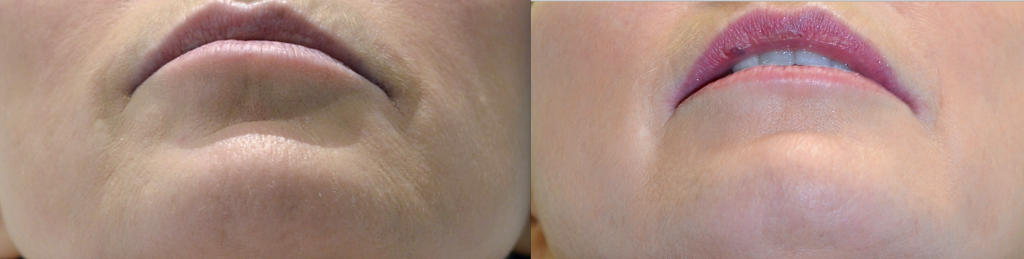
Combined CO2 & Erbium Laser Skin Resurfacing.

Combined CO2 & Erbium Laser Skin Resurfacing with Upper Blepharoplasty.
Depending on the size of the area of the face being treated is a guide to the anaesthesia required. Local anaesthesia, with or without sedation, is all that is commonly required. General anaesthesia is not necessary.
Eyeshields or goggles are placed over the eyes to protect them and the laser is passed over the skin, sending out pulses of light. The treatment takes between 30-60 minutes depending on the facial area and once the treatment is completed, the skin is covered with an antibiotic ointment and a cold compress placed over the area to reduce swelling.
All patients are able to go home approximately 30minutes after the procedure.
Single areas of the face, such as around the eyes or lips, can be treated with local anaesthesia only, using a combination of topical numbing creams and local anaesthesia. Treatment of the entire face can be completed with local anaesthesia with or without sedation.
How long does the CO2 laser take to work?
You will see some immediate results from the CO2 laser resurfacing, with the final result at around 6 months after treatment. The Cortex combined CO2 and Erbium laser is customised to individual patients. Treatments that are deeper are more effective, but associated with more healing and downtime. Your skin heals between 5-days and 2-weeks depending on the depth of the laser resurfacing, and there may be a period of 4 to 6 weeks after that when your skin might be slightly pink. During this period, your skin will feel smoother and looks less blotchy. During the first few weeks you will see fewer lines, less blotchiness, more even colour and more of a glow.
How long does the CO2 resurfacing laser last?
Laser skin resurfacing lasts for many years. The effectiveness depends on how well you protect your skin from the sun and other factors that including your genetics, ethnicity, smoking, changes in weight, etc. To maintain the appearance of your rejuvenated skin, Dr De Silva recommends you apply sunscreen (of SPF 30 or above) and wear brimmed hats. Generally, the good effects of CO2 laser treatment lasts for more than 10 years.
Most patients return to full social and professional activities between one and two weeks.
The time needed for healing and recovery after laser resurfacing varies according to the size and depth of the treated area and the patient’s skin type. In general, the younger fresher skin replaces the older sun-damaged skin between 1 and 2 weeks.
Cold packs and analgesia are used to reduce swelling and discomfort. The skin may occasionally remain red for several weeks, and this can be masked with cosmetic concealer after 1-2 weeks. Some patients may have darkening of the skin approximately 1-month after surgery, but this is temporary and resolves (termed post-inflammatory hyper pigmentation). It and can be covered with cosmetic concealer if required. Most patients return to full social and professional activities after one to two weeks.
Care of the treated area of the face while the skin is healing is important and includes:
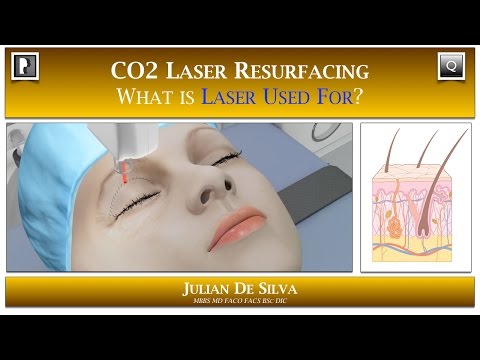 Skin & Laser Question- How can CO2 Laser Skin Resurfacing benefit me?
Laser skin resurfacing is an effective technique for rejuvenating the skin for treating:
There are some considerations when Dr De Silva uses laser resurfacing:
After laser treatment the older skin will become dry and peel off. During this time it is important to keep the skin lubricated. To care for the skin after resurfacing:
Moisturiser
After laser resurfacing it is important to keep your skin moisturized. I provide my patients with a prescription for bactroban (Mupirocin 2%) ointment after laser resurfacing procedure, this both lubricates the skin and protects against infection (about 5-7days). Vaseline is an alternative that can be used to lubricate the skin.
After this time a light moisturiser (both creams and lotions are fine) are recommended, a hypoallergenic moisturiser such as Cetaphil moisturiser, your skin can be more sensitive at this time and for some people using a regular moisturiser can irritate the skin. If your skin is more sensitive it is fine to continue with Vaseline as this generally very well tolerated.
Cleaning your skin
It is important to gently cleanse skin and to clean away debris. You can complete this with sterile (boiled) water and gentle patting (avoid rubbing your face at this time).
Dr De Silva uses an erbium laser that tightens superficial skin and reduces the amount of peeling that is seen after CO2 laser resurfacing.
Sun Protection
After 2 weeks you can return to the use of your regular moisturizer and it is important to both avoid sun exposure and use a sunblock (of SPF 30 or above) for 3 months.
Before laser treatment, it is important to avoid sun and avoid tanning your skin. For some patients, Retin A and hydroquinone can be used for two weeks before laser.
Other treatments have been also used in laser aftercare including vitamin C, Green Tea, glycolic acid and retinoids. However, their effectiveness in healing has not been proven.
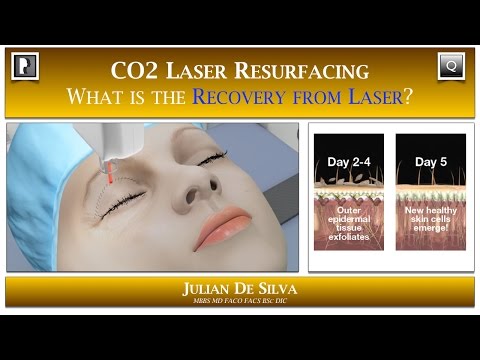 Skin & Laser Question- What is the Recovery Time from CO2 Laser Skin Resurfacing?
After laser treatment the older skin will become dry and peel off, during this time there are steps that can be taken to speed up the recovery:
Generally fractionated CO2 lasers offer an effective skin rejuvenation while minimizing the potential side effects and offer a fast recovery.
Modern day lasers offer faster recovery by treating only a proportion of the skin (termed fractionated), whereas older lasers that treated all of the skin surface (termed ablative lasers) were associated with higher risks and longer recovery.
Dr De Silva utilises state-of-the-art laser machines that result in faster recovery and shorter downtime.
Keeping the skin moist and regularly cleaned will help a speedy recovery.
Cleansing gently with gauze sponges to clean the skin every 3-4 hours is recommended.
Depending on the type of laser resurfacing the downtime can vary, most patients are able to return to work with in 7-10 days.
Although a lighter laser resurfacing can be completed with faster recovery, if the treatment is too light it will be less effective. In the same way a spa may offer a “lunchtime peel” with immediate recovery, the results are also likely to be difficult to see. Sun exposure should be minimized for 3-months after laser resurfacing to ensure a fast recovery.
Redness is dependent on patient and treatment characteristics, including skin type, type of laser and depth of the laser treatment.
Redness is common immediately after laser treatment and for the first week after laser. Occasionally, there can be redness for up to six weeks and, rarely, for six months. To reduced the chance of redness several measures can be taken during your laser treatment:
If you have redness after laser, skin creams can be prescribed that will reduce the redness faster, these include moisturisers, sun block and anti-inflammatory creams. Sometimes your own skin creams, including moisturisers can irritate your skin as it can be more sensitive after laser treatment, it may be important to stop using all your regular creams for a period after laser treatment and use hypoallergenic products.
Lines around the mouth are often deep and a difficult area to treat. Dr De Silva considers the following characteristics for treatments around the mouth:
The lines around the mouth can be softened with a combination of deep and superficial laser resurfacing and by adding volume to the lip area.
The cost of laser resurfacing is dependent on the type of laser, the equipment that is used to complete the procedure, the location and the doctor’s expertise and form of anaesthesia.
Modern CO2 and Erbium lasers are advanced machines that use state-of-the-art technology to treat “fractional” areas preserving natural skin that enhances recovery.
Dr De Silva uses dual technology CO2 combined with erbium to target superficial and deep skin. CO2 laser is advanced technology that is only completed by trained doctors.
The treatment cannot be legally administered by other practitioners in the UK. As a consequence, the total cost varies depending on the technology used, the equipment and the number of treatment sessions.
Fractional laser resurfacing is an effective treatment for acne scarring, but laser treatment cannot cure acne.
Key to effective laser treatments are these considerations in acne:
Laser resurfacing is an effective treatment in improving the appearance of the skin. It requires a comprehensive assessment to evaluate the type and severity of acne scarring and if additional treatments are required to enhance the results with a discussion about expectations from treatment. If you have active acne, prescription medicines may be needed to control it. It is important to have acne controlled with medications before laser treatment for scars.
Acne scarring can be a distressing condition. Whilst there are a multitude of treatment options available, there are patients who have tried everything including combinations of lasers, peels, retinoids and needling, but are still searching for a solution. No single treatment is able to completely correct acne scarring, each different treatment has a role in improving scarring.
Older CO2 laser were effective but had longer recovery and downtime, with a greater chance of redness and pigmentation after treatment.
Fractionated lasers are modern and enhance recovery by sparking portions of the skin. A fractionated laser can be either an Erbium or CO2 laser. Both are effective, with the physician who is using it is more important then the actual laser.
Fractionated technology is aimed at achieving similar results to standard “resurfacing” with less downtime. Dr De Silva prefers to use a combination CO2 and Erbium laser, as CO2 laser tightens deeper skin and the Erbium laser tightens more superficial skin.
Renowned expert in Facial Cosmetic and Plastic Surgery. Signature techniques in Blepharoplasty, Rhinoplasty and Facelift surgery. Expert in revision surgery and in natural looking results